Wastewater Treatment
Robotic Aeration Basin Cleaning
Waste water sludge removal does not have to include shutting down or bypassing normal operations. Take a look at this video to see how we removed over 2,800 cubic yards of wet sludge from this WWTP aeration basin while it remained in full operation.
Project Summary
Wet In-Place Sludge:
2,866 cubic yards
Dry Sludge Removed:
900 cubic yards / 555 tons
Project Duration: 3 months
Days Plant Shut Down: ZERO
Confined Space Entries: ZERO
WWTP Robotic Grit Removal
Sciphyn’s robotic grit removal helps wastewater treatment plants regain usable capacity lost to accumulated sand, grit, and sediment. These deposits occupy valuable basin space, reducing the volume available for wastewater storage and treatment. Removing that buildup helps restore working volume and supports the retention time needed for effective treatment, contributing to a facility’s ability to meet applicable discharge permit limits. In suitable applications, our remotely operated robots complete this work while the facility remains online and in service, avoiding the disruption of draining basins and eliminating confined space entry.
Recovering that capacity is especially valuable before large rain events, when stormwater inflow and groundwater infiltration can substantially increase the amount of wastewater reaching the plant. Removing accumulated deposits from treatment and equalization basins restores space that operators can use to manage higher flows within the facility’s design limits. As part of a broader maintenance and wet-weather management program, robotic grit removal can help reduce the risk of treatment disruptions and permit exceedances associated with lost basin capacity, helping facilities prepare for heavy rainfall while making better use of their existing infrastructure.
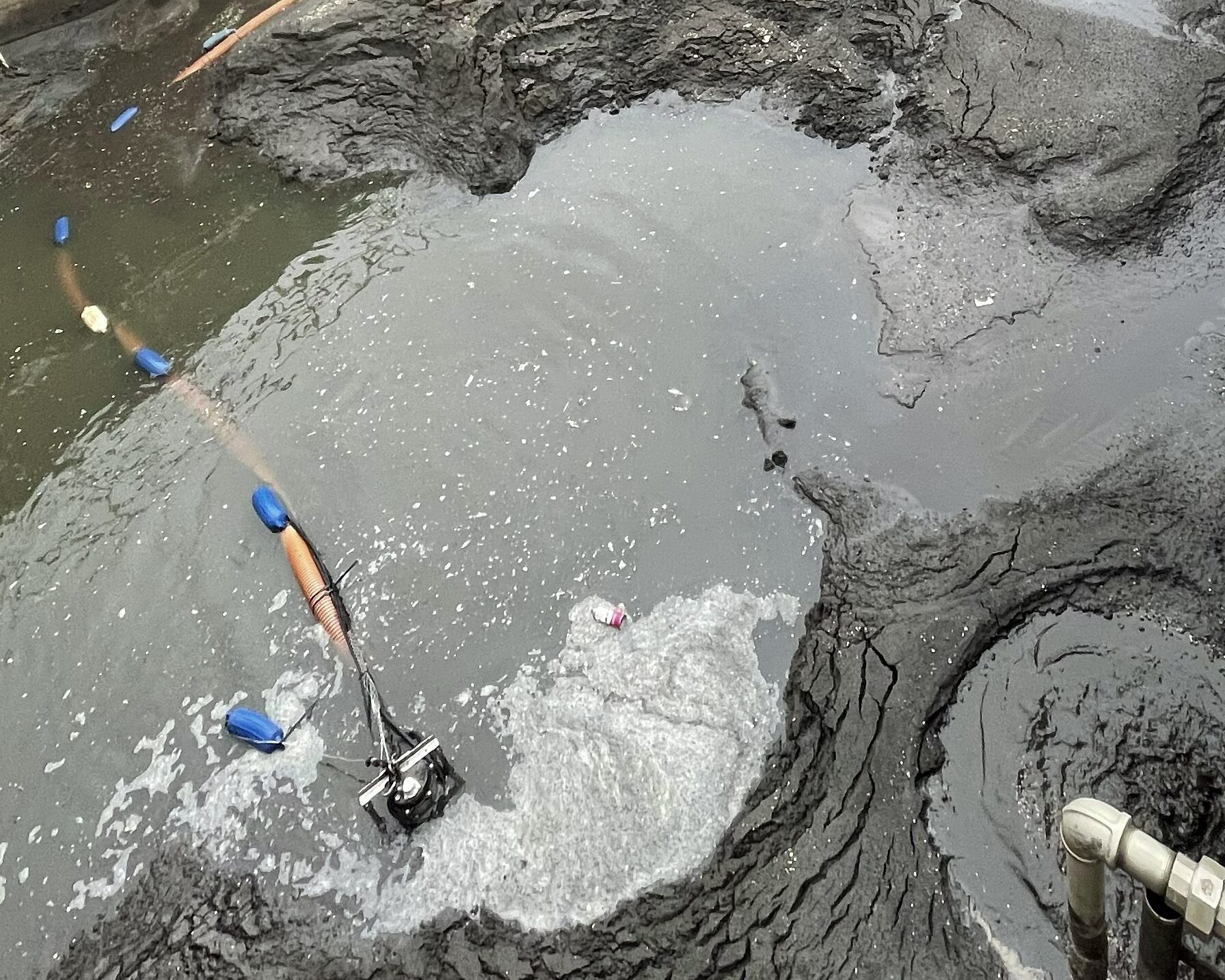
Grit and Sludge Removal Applications

- Aeration basins, ponds and lagoons
- Settling basins and ponds
- Equalization basins and tanks
- Emergency holding basins
- Wastewater treatment ponds and lagoons
- Polishing ponds
- Sludge storage lagoons and ponds
- Stormwater retention basins and ponds
- Effluent holding basins
- Sludge holding and blending tanks
- Buffer Tanks
- Digesters
- Grit Chambers
- Oxidation basins and ditches
- Backwash collection and settling basins
- Chlorine contact basins
- Dechlorination basins
- Effluent clearwells
- Discharge channels
- Clarifiers
- Outfall basins
- Reclamations basins
- Thickener tanks
- Collection basins and sumps
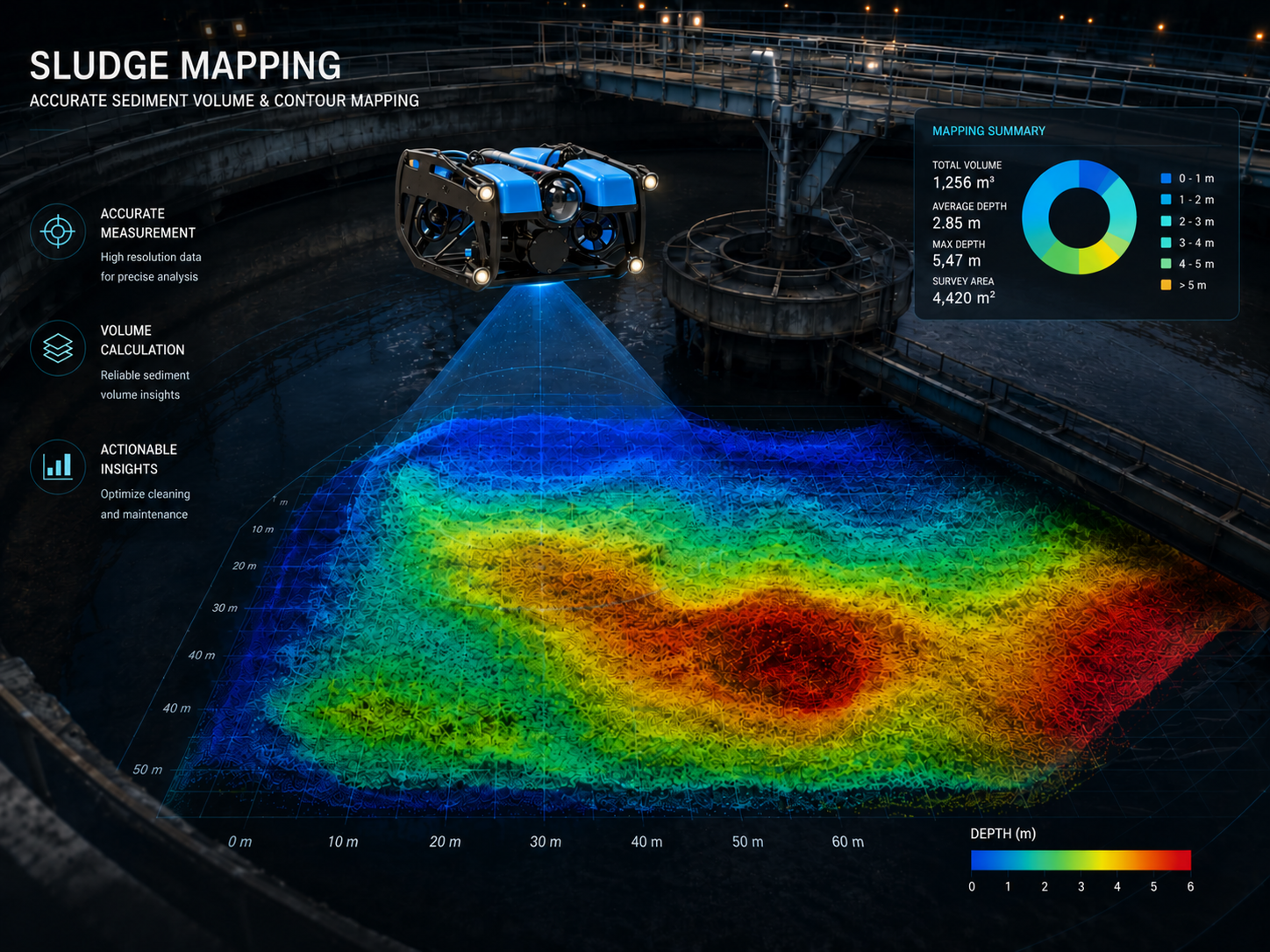
Grit and Sludge Mapping for Accurate Planning
Sciphyn’s sludge mapping gives wastewater treatment plants a clearer understanding of how much material has accumulated, where it is concentrated, and how much usable basin volume it occupies. Using sonar technology, we map sludge depths and estimate accumulated volumes in suitable aeration basins, clarifiers, equalization basins, ponds, and lagoons, often while they remain in service. This information helps plant operators identify priority cleaning areas and determine whether a project requires targeted removal or a more extensive cleanout.
Establishing these conditions before cleaning begins helps define a more accurate scope of work, including removal areas, target depths, equipment needs, dewatering arrangements, and estimated disposal quantities. Customers can develop budgets and schedules around measured conditions, reducing the risk of underestimating the job or paying for unnecessary work. Identifying deeper deposits and larger sludge volumes early helps prevent avoidable scope increases, change orders, additional mobilizations, and scheduling delays. When included in the project, a follow-up survey can also document remaining deposits and help verify completion against the agreed scope.